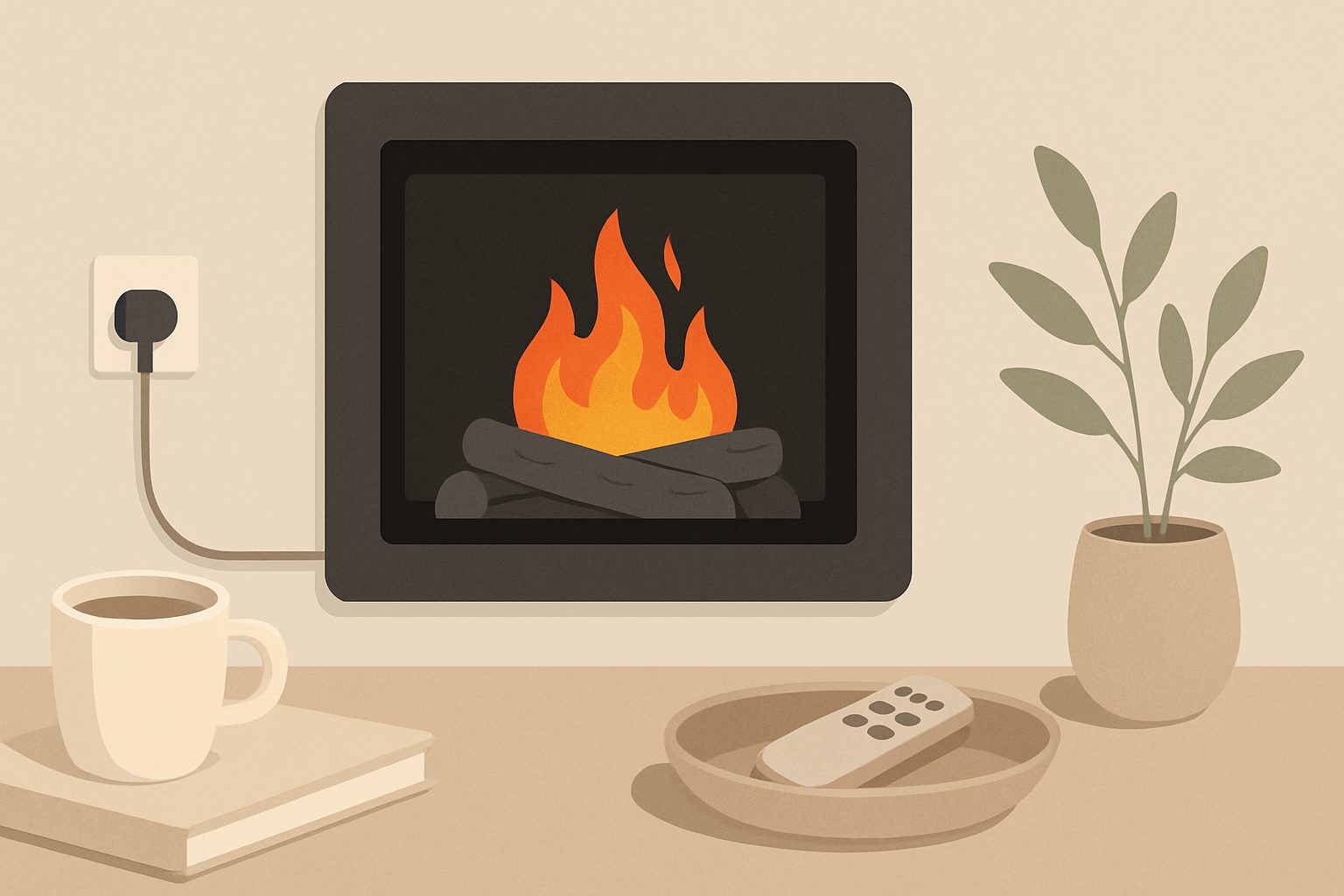
Best Electric Fires with Remote Control and Thermostat UK 2025
If you're looking to add warmth and ambiance to your home without the installation hassle of a traditional fireplace, an electric fire with remote control and thermostat puts convenience at your fingertips. These units have become notably more sophisticated in recent years, with many now offering Wi-Fi connectivity, programmable scheduling, and precise temperature management. For anyone juggling modern life, the ability to warm a room while you're still at work—or to adjust the heat without leaving the sofa—makes a genuine difference.
The appeal goes beyond laziness. A good thermostat means your electric fire runs only when needed, reducing energy waste. Remote control eliminates the need to get up to fiddle with dials, and smart-home integration lets you build heating into broader home automation routines. That said, not all electric fires with these features are equally well-designed, and some marketing claims outpace reality.
What Remote Control and Thermostat Actually Do
A remote control on an electric fire typically manages flame effect intensity, heat output, and power on/off. Crucially, the thermostat maintains your chosen room temperature by cycling the heating element on and off, rather than running continuously at full blast. This prevents overheating and cuts energy consumption compared to units without thermostatic control.
The best implementations include:
- Accurate temperature sensing: The thermostat should read ambient room temperature reliably, ideally with a sensor positioned away from the heater itself.
- Gradual heating: Rather than heating aggressively then cutting out abruptly, good units ramp up and down smoothly to reach your target temperature.
- Independent flame and heat control: Many people want the visual effect without the heat, or vice versa. Units that separate these controls are more flexible.
- Display clarity: LED or LCD screens should show current room temperature, set temperature, and operational mode clearly.
Inset vs. Freestanding: Which Suits You?
Inset models fit into existing fireplaces or specially prepared cavities. They're sleeker and integrate neatly into rooms with chimney breasts. The trade-off is installation complexity—you'll likely need a qualified electrician and may need to modify the chimney opening. They tend to deliver better heat distribution because they sit flush with the wall.
Freestanding models sit in front of a fireplace or against any wall. Setup is straightforward: plug in and go. They're more portable if you rent or like rearranging furniture. Aesthetically, they're less seamless, but modern designs have improved considerably, and many come with a fire surround that looks built-in.
Smart-Home and App Control
Wi-Fi-enabled electric fires are increasingly common, letting you control heating via smartphone app or voice assistant. Real-world utility here varies. Turning on your fire remotely before you arrive home is genuinely useful. Scheduling heat to come on an hour before you wake up works well. Voice control ("Alexa, set the fire to 20 degrees") is handy, though using a remote is often faster for frequent adjustments.
Where smart features add less value: many people find the novelty wears off quickly, and the extra cost isn't justified if you're mostly adjusting settings in the evening. Focus on whether the non-smart functionality is solid first; Wi-Fi is a bonus, not a necessity.
Be wary of apps that require constant internet connection or cloud access for basic functions. The best implementations let the fire work independently, with app control as an optional layer. This matters if your Wi-Fi drops or the app becomes unsupported.
Flame Effect Quality
The visual realism of the flame matters more than most specifications suggest. Cheaper units use static images that flicker unconvincingly. Better models use LED-based effects with depth, colour variation, and realistic movement. Some use water-vapour technology to create an illusion of real flames—these look superb but are pricier and need occasional refilling.
Flame effect brightness should be independently dimmable. This lets you enjoy the ambiance without excessive heat if you're warming a room with other sources, or running it in summer purely for aesthetics.
Heat Output and Room Size
Electric fires typically output between 1 and 2kW. A 1kW unit suits small bedrooms or supplementing other heating; 2kW is more versatile for medium living spaces. If you're relying on an electric fire as your primary heat source, you'll need adequate insulation and realistic expectations—electric heating is expensive compared to gas central heating.
Check the thermostat's temperature range. Most work between 5°C and 35°C, which covers normal home conditions. Some let you set lower thresholds to prevent rooms freezing if you're away in winter.
Build Quality and Safety
Units from established manufacturers generally include thermostatic cutoffs that shut down the heater if it overheats, and tip-over switches on freestanding models to prevent accidents if knocked over. Check for these features explicitly.
Look at the warranty and what it covers. Two years for electrical components and five years for the heating element are reasonable expectations. Cheap units often come with minimal warranties, which is a warning sign about longevity.
Making Your Choice
Prioritise thermostat accuracy over brand name. A well-functioning thermostat from a lesser-known manufacturer beats a poorly-calibrated one from a premium brand. Read reviews from people describing actual temperature control, not just appearance.
If you rent or anticipate moving, freestanding units with straightforward plug-in operation make more sense. If you own and want a polished look, inset models reward the installation effort. Smart features are genuinely convenient but shouldn't drive your decision—base that on heating performance, thermostat reliability, and flame effect quality instead.
Electric fires with remote control and thermostat work best as supplementary heating or for ambiance in well-insulated spaces. They'll never match the cosiness of a real fire, but they're reliable, controllable, and require far less maintenance. Choose one that feels responsive to use and keeps your room at a comfortable, steady temperature—that's where the real value lies.
More options
- Electric Fireplaces – Amazon UK General Category (Amazon UK)
- Dimplex Electric Fires – Amazon UK (Amazon UK)
- Wall-Mounted Electric Fires – Amazon UK (Amazon UK)
- Electric Fireplace Suites – Amazon UK (Amazon UK)
- Freestanding Electric Stove Fires – Amazon UK (Amazon UK)